
What is driving hygiene paper and eco friendly tableware in Africa
Demand for hygiene paper and eco friendly tableware in Africa rests on three strong forces: rapid urbanisation, the spread of modern retail and food service, and government action against plastic waste. As more families move into cities, they buy toilet rolls, kitchen towels and facial tissue from supermarkets instead of relying on alternatives. Restaurants, hotels and quick service chains are expanding, and they need napkins and disposable tableware every day.
The continent is diverse, and demand patterns differ widely. Coastal hubs such as Lagos, Accra, Nairobi, Mombasa, Dar es Salaam and Durban have well developed modern trade, while inland markets depend on wholesalers and long road corridors. Income levels, retail formats and import rules vary from country to country, so a successful importer builds a clear plan for one or two markets before expanding across a region.
Population growth adds long-term momentum. Africa has a young and expanding population, and every new urban household, school, clinic and restaurant adds to the base of regular hygiene paper buyers. Rising awareness of hygiene in homes, hospitals and public spaces supports steady use of tissue, towels and napkins. For importers willing to build distribution patiently, this creates durable demand rather than short-lived spikes.
Plastic bans and the shift to eco friendly tableware
African governments have been among the most active in restricting plastic. Rwanda was an early mover with a ban on plastic bags, and Kenya introduced a strict plastic bag ban in 2017. Many other countries have followed with bans or restrictions on bags and some single-use items. These rules have made caterers, event organisers and hotels more open to bagasse plates, bowls and clamshells made from sugarcane fibre.
Consumer attitudes are also changing, especially among younger urban buyers and tourists. Hotels and lodges in tourism destinations promote plastic-free dining as part of their brand, and corporate caterers respond to client sustainability policies. Bagasse tableware looks natural, handles hot and oily local dishes well in most uses, and helps operators comply with local rules without sacrificing presentation at weddings, conferences and outdoor events.
Food service and hospitality growth
Quick service restaurants, cafes, food delivery apps and institutional caterers are expanding in major African cities. Each outlet uses tissue napkins, takeaway containers and paper towels, and chains prefer consistent specifications across locations. Hotels, hospitals, schools and offices add steady demand for toilet rolls, M-fold towels and facial tissue. For distributors, institutional customers offer reliable monthly volumes that balance the more price sensitive retail trade.
Pack size is a key decision. Many retail shoppers buy single rolls or small packs, while wholesalers and institutions prefer bulk cartons. Offering both formats lets a distributor serve open markets and modern retail at the same time. Clear, attractive packaging with simple product information helps a new brand stand out on crowded shelves, especially where shoppers compare several imported and local brands side by side.
| Buyer segment | Main products | What drives the purchase |
|---|---|---|
| Supermarkets and wholesalers | Toilet rolls, kitchen towels, facial tissue | Value packs, brand trust, steady supply |
| Hotels and lodges | Dinner napkins, box tissue, bagasse tableware | Guest experience, plastic-free image |
| Restaurants and delivery kitchens | Clamshells, containers, napkins | Strength, cost per meal, compliance |
| Hospitals, schools, offices | M-fold towels, toilet rolls | Hygiene, tender compliance, reliability |
Channels and logistics across African markets
Most hygiene paper reaches end users through importer-wholesalers who supply open markets, small shops and regional distributors. Modern retail chains buy directly from importers or through category distributors. Institutional business is often won through tenders. Main entry ports include Mombasa, Dar es Salaam, Lagos, Tema, Durban and Djibouti, with inland markets served by road corridors, so landed cost must include inland haulage and border handling.
Some African markets require pre-shipment inspection, conformity certificates or product registration before clearance. Requirements change and differ by product, so confirm them with your clearing agent before each new line. Payment terms are another planning point. Many importers use letters of credit or advance payment structures, and a clear agreement on Incoterms 2020, documents and inspection responsibilities avoids delays at the port.
HS codes and duty for hygiene paper and tableware
Toilet paper, napkins and towels are usually classified under HS heading 4818, and moulded bagasse tableware under 4823, often 4823.70. Confirm exact codes with a local customs broker. Duty depends on national tariffs and any regional customs union, such as the East African Community or ECOWAS, so check your national customs authority or a broker instead of relying on online figures.
Regional trade blocs also shape distribution strategy. Goods cleared in one member country of a customs union may move to neighbours with simpler procedures, which is why many importers base themselves in regional hubs such as Kenya, Tanzania, Ghana or Nigeria. Discuss with your broker how onward movement works for your products, what documents are needed at each border and how long typical transit takes.
In African markets, the supplier who delivers the same quality every time becomes the brand. Consistency builds trust faster than any advertising budget.
Why source hygiene paper and eco friendly tableware from India
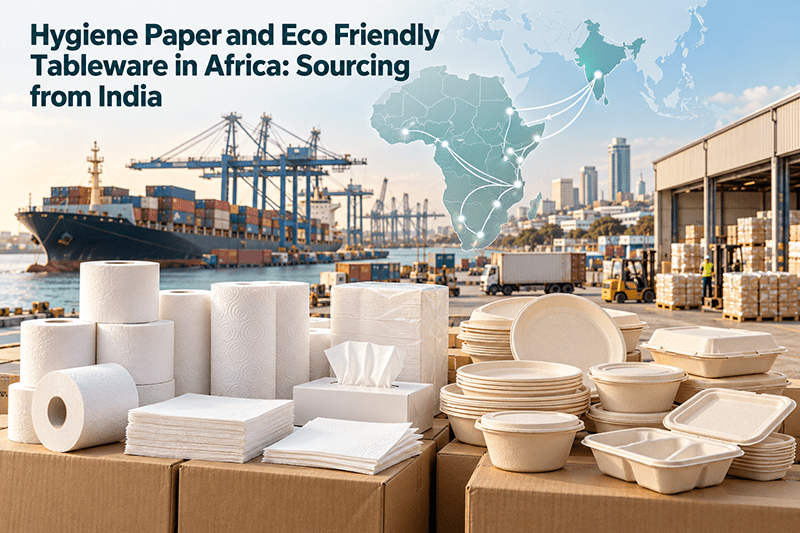
India has long trade links with East and West Africa, regular sailings from western ports and a broad manufacturing base. White Orchid makes 100% virgin pulp tissue, kitchen paper towels, facial tissue and sugarcane bagasse tableware at Santej, Gujarat, backed by ISO 9001, ISO 14001, ISO 22000, GMP and FSC certification. Mixed containers let an importer test tissue and tableware together, and private label packaging is available with an MOQ.
Shipping from western India to East African ports is relatively short, while West and Southern African routes take longer, often with transhipment. Transit times vary by carrier, route and season, so build a realistic buffer into your stock plan. Our team can advise on container loading, carton sizes and pallet choices that reduce damage on long inland journeys after the goods arrive at port.
- Start with one or two cities where modern retail and food service are growing.
- Confirm inspection, registration and conformity rules before shipping each new product.
- Offer bagasse tableware to hotels, caterers and events affected by plastic bans.
- Include inland haulage and border handling costs when working out landed cost.
- Balance price sensitive retail with steady institutional and hotel customers.
Partner with White Orchid in Africa
White Orchid is appointing importers and distributors across Africa for tissue products, thermal rolls and bagasse tableware. We ship from Mundra, Pipavav and Nhava Sheva under EXW, FOB, CFR, CIF or door delivery terms. Learn more about White Orchid, then contact our team on +91 9825109781 (phone or WhatsApp) or info@whiteorchidtissue.com for samples, specifications and a quotation.
Frequently Asked Questions
Which African countries have banned plastic bags?
Rwanda and Kenya are well known examples, and many other African countries have introduced bans or restrictions on plastic bags and some single-use items. Check the current rules in each market you plan to serve.
Is bagasse tableware suitable for African food service?
Bagasse tableware handles hot and oily dishes well in most uses and suits caterers, hotels and events. Test samples with your typical menu items and ask your supplier for product specifications before ordering.
Do I need pre-shipment inspection to import tissue into Africa?
Some African countries require pre-shipment inspection or conformity certificates for certain goods. Requirements vary by country and product, so confirm them with your clearing agent before the goods leave India.
What payment terms are common for African tissue importers?
Letters of credit and advance payment are common, especially for first orders. Agree payment terms, Incoterms and document requirements clearly in the contract so clearance and payment move smoothly.