
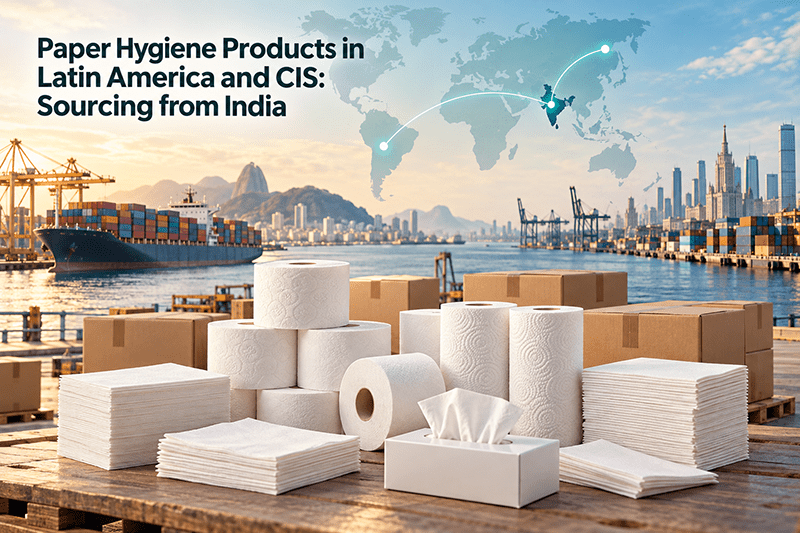
Why paper hygiene products are growing in Latin America and CIS
Latin America and the CIS are two of the most interesting emerging regions for paper hygiene products. Both have large urban populations, expanding modern retail and growing hospitality sectors, yet many countries still rely on imports for some tissue grades or for private label supply. Rising hygiene awareness, supermarket growth and the spread of quick service restaurants all support steady demand for toilet rolls, napkins, towels and facial tissue.
Local production exists in both regions, but it is often concentrated in a few large producers, specific grades or particular countries. Importers find openings in private label programmes, away-from-home products, speciality napkins and markets far from domestic mills. A flexible overseas supplier that offers mixed containers and consistent specifications can help regional distributors fill these gaps without the cost of building their own converting lines.
Latin America: buyers and demand drivers
In Latin America, supermarket chains, pharmacy chains, cash and carry wholesalers and traditional neighbourhood stores all sell household tissue. Hotels, resorts and restaurants in tourist regions buy premium dinner napkins and facial tissue, while offices, hospitals and industrial sites use M-fold towels and jumbo rolls. Delivery apps and quick service chains increase napkin consumption in large cities, from Mexico City to Bogota, Lima, Santiago and Sao Paulo.
Buying habits vary widely between countries. Some markets are highly price sensitive, favouring value packs and simple packaging, while others have a strong middle class that pays for softer, premium products. Spanish is the working language in most of the region and Portuguese in Brazil, so product sheets, labels and packaging should be translated properly. Local distributors with sales teams in each city are usually the backbone of any successful launch.
CIS: buyers and demand drivers
The CIS includes large and diverse markets such as Kazakhstan, Uzbekistan, Kyrgyzstan, Azerbaijan, Armenia and Georgia, with Russian widely used for business. Growing cities, new shopping centres, hotels and restaurants support demand for toilet rolls, napkins and facial tissue. Many of these countries are landlocked or far from major paper mills, so importers who can manage logistics efficiently can build strong positions with wholesalers and retail chains.
Hospitality and construction booms in several Central Asian capitals have created new demand from hotels, business centres and restaurants. Wholesale bazaars remain important for reaching small shops, while modern supermarkets are expanding. Importers who combine a central warehouse with reliable delivery to regional towns often win long-term customers, especially when they can supply a full tissue range and offer consistent packaging over time.
| Factor | Latin America | CIS |
|---|---|---|
| Main languages for labels | Spanish, Portuguese | Russian, plus national languages |
| Key channels | Supermarkets, pharmacies, wholesalers | Bazaars, wholesalers, supermarkets |
| Typical logistics | Direct sea freight to Pacific or Atlantic ports | Sea then rail or road, multimodal |
| Strong segments | Tourism, food service, private label | Hotels, retail growth, institutions |
Regulations, HS codes and documents
Tissue products are usually classified under HS heading 4818, and bagasse tableware under 4823; confirm exact codes with a local customs broker. Each country sets its own duty, and regional agreements may apply, so check the national customs tariff instead of relying on published estimates. Many Latin American markets require specific labelling in Spanish or Portuguese, and some ask for sanitary or product registration for items that touch food.
In CIS markets, certificates of origin, conformity documents and correct labelling in Russian or national languages are commonly needed. Rules can differ between countries and change over time, so work closely with your customs broker and agree who prepares which documents before production. Clear Incoterms 2020 terms, such as FOB, CFR or CIF, avoid confusion about who pays for freight, insurance and transhipment on longer routes.
Payment and credit terms deserve early discussion. Letters of credit, advance payments and documentary collections are all used in these regions, and currency movements can affect margins on long transit shipments. Agree the payment method, document list and inspection arrangements in the sales contract, and keep a clear timeline so that production, shipment and payment milestones are understood by both sides from the start.
Logistics for paper hygiene products from India
Shipments to Latin America usually sail from Mundra, Pipavav or Nhava Sheva with transhipment in Asia, the Middle East or the Mediterranean, depending on the destination coast. For CIS markets, cargo often moves by sea to a gateway port and then by rail or road. Transit times are longer than for nearby markets and vary by carrier, route and season, so plan stock with generous buffers.
Because tissue is bulky, freight is a large share of landed cost on long routes. Maximise container use with carefully planned carton sizes and mixed loads, and consider higher value items such as facial tissue boxes and printed napkins alongside toilet rolls. A good supplier will share loading plans, carton dimensions and pallet options so you can compare scenarios before confirming your order.
In distant markets, the best importers treat every container as a carefully planned product mix, not just a volume order. Freight efficiency often decides who wins on price.
Why source paper hygiene products from India
White Orchid manufactures tissue from 100% virgin pulp at Santej near Ahmedabad and holds ISO 9001, ISO 14001, ISO 22000, GMP and FSC certification. The range covers napkins, toilet rolls, kitchen towels, facial tissue and multi-fold tissue, plus thermal rolls and bagasse tableware. Private label on poly bags, boxes and master cartons, and logo printing on napkins with an MOQ, suit distributors building their own brands.
Working with one manufacturer for several categories also simplifies registrations and audits. Distributors can present a single set of certificates, specifications and factory details to retail chains and customs authorities, rather than managing many suppliers. As the business grows, the same partner can add bagasse plates and other eco tableware for hotels and caterers that want plastic-free options alongside their tissue supply.
- Choose one or two priority countries before expanding across the wider region.
- Translate labels and product sheets properly into Spanish, Portuguese or Russian.
- Confirm HS codes, duty and registration needs with a local customs broker.
- Plan container mix carefully because freight weighs heavily on long routes.
- Build buffer stock to cover longer transit and transhipment times.
Become a White Orchid distributor
White Orchid is appointing importers and distributors across Latin America and the CIS. We ship by sea and air under EXW, FOB, CFR, CIF or door delivery terms and can plan mixed containers for new markets. Contact White Orchid on +91 9825109781 (phone or WhatsApp) or info@whiteorchidtissue.com, and view our certificates to support your registrations.
Frequently Asked Questions
Which tissue products sell best in Latin American markets?
Toilet rolls and napkins are the core items, with facial tissue and kitchen towels growing in modern retail. Hotels and restaurants in tourist regions also buy premium dinner napkins and box tissue.
How do tissue shipments from India reach Central Asia?
Cargo usually travels by sea to a gateway port, then continues by rail or road to Central Asian cities. Transit times vary by route, carrier and season, so plan orders well ahead.
Do I need labels in Russian for CIS tissue imports?
Many CIS markets expect labelling in Russian or the national language. Requirements differ by country, so confirm them with your customs broker and share approved artwork before production begins.
Can White Orchid supply private label tissue for Latin America?
Yes. White Orchid offers private label on poly bags, boxes and master cartons with an MOQ, so distributors can launch their own tissue brand with Spanish or Portuguese packaging.