
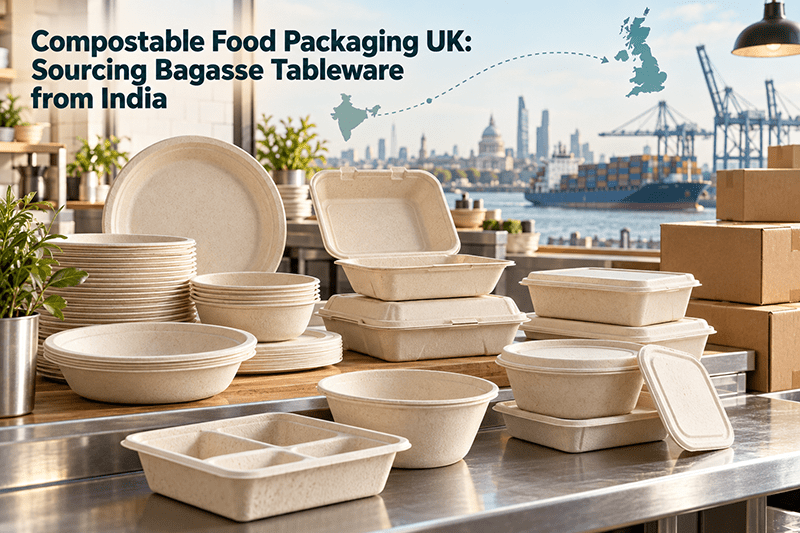
What drives compostable food packaging in the UK
The market for compostable food packaging in the UK has grown on the back of plastic restrictions, strong consumer awareness and a large takeaway and delivery culture. Cafes, street food traders, caterers, universities and restaurant chains want plates, bowls and containers that avoid single-use plastic and look good on social media. Sugarcane bagasse tableware fits this brief because it is plant-based, sturdy and suitable for many hot meals.
England, Scotland and Wales have each moved to restrict several single-use plastic items used in food service, such as plates, cutlery and some polystyrene containers. The details differ between nations, so importers and distributors should check the current rules for each. These measures have pushed many operators to review their full packaging range and switch to fibre-based alternatives that are plastic-free and suitable for hot food.
Consumer expectations reinforce the regulations. Many UK customers now notice what their lunch is served in, and independent cafes use plastic-free packaging as part of their identity. Larger chains publish sustainability commitments and ask suppliers for evidence behind each product claim. This mix of rules and reputation keeps demand for well documented bagasse tableware steady, even when economic conditions put pressure on operators to control costs.
Who buys compostable food packaging in the UK
Buyers fall into clear groups. Catering disposables wholesalers and cash and carry groups supply independent cafes and takeaways. Contract caterers serve offices, hospitals, schools and universities. Event caterers and festival traders buy large volumes seasonally. Restaurant chains and delivery-led brands order under supply agreements with specific sizes and branding. Online sellers supply small businesses and households looking for eco friendly party tableware and catering packs.
Procurement styles vary across these groups. Wholesalers want a broad catalogue, reliable stock and competitive trade pricing. Contract caterers and public sector buyers often use framework agreements and ask for detailed specifications and compliance files. Event caterers need large volumes at short notice in spring and summer. Understanding these differences helps an importer decide which stock to hold, which sizes to prioritise and how to present the range.
| UK buyer group | Popular bagasse items | Purchase priority |
|---|---|---|
| Takeaways and street food | Clamshells, meal trays, bowls | Strength with hot food, price per unit |
| Contract caterers | Compartment plates, containers with lids | Consistent supply, compliance files |
| Event and festival caterers | Round plates, snack trays | Volume availability, quick delivery |
| Online eco retailers | Mixed plate and bowl packs | Attractive packs, clear eco claims |
Rules and claims for compostable packaging
UK food contact rules grew out of the EU framework, including Regulation (EC) 1935/2004, so buyers expect food contact documentation for tableware. If you describe products as compostable, ask your supplier for test reports against EN 13432, the standard most UK buyers recognise. UK consumer and advertising rules expect environmental claims to be accurate and backed by evidence, so avoid vague wording and match every claim to your documents.
Disposal is part of the conversation. Industrial composting and food waste collection vary by council and by business waste contract, so many UK operators describe bagasse as plant-based and plastic-free first, and compostable where facilities exist. Helping customers understand this, perhaps with simple guidance on packs or product sheets, builds trust and protects your brand from accusations of greenwashing.
HS codes and landed cost for compostable food packaging in the UK
Moulded bagasse tableware is usually classified under HS heading 4823, often 4823.70 for moulded or pressed pulp articles. Confirm the exact commodity code with your customs broker, then check the current duty and any preference on the UK Trade Tariff. Add freight, port charges, VAT and haulage to work out landed cost, and review the calculation whenever freight rates change.
A simple landed cost sheet helps you quote confidently. List the ex-works or FOB price, ocean freight, insurance, UK port and clearance charges, duty, haulage to your warehouse and your storage and handling costs. Work out the cost per unit for each item, then set trade prices with room for distributor and retailer margins. Real figures depend on market, freight and duty, so update the sheet regularly.
Why UK importers source bagasse tableware from India
India has abundant sugarcane and a growing moulded fibre industry. White Orchid produces bagasse plates, bowls, clamshells and containers with lids at Santej, Gujarat, with ISO 9001, ISO 14001, ISO 22000, GMP and FSC certification. Sea freight from Mundra, Pipavav or Nhava Sheva to UK ports typically takes several weeks, varying by carrier, route and season.
A broad range under one roof helps UK distributors. You can combine clamshells, meal trays, bowls, containers and tissue napkins in one container and offer caterers a complete plastic-free set. Private label on poly bags, boxes and master cartons is available with an MOQ, so wholesalers can build their own eco brand while keeping supplier paperwork consistent.
UK caterers do not just want plastic-free packaging. They want products that survive a busy lunch rush and claims they can defend if a customer asks.
Building a UK distribution business
Start by choosing a focus: independent takeaways through wholesalers, contract caterers, or online retail. Prepare clear product sheets with sizes, capacities, pack counts, case dimensions and pallet patterns. Hold stock in a UK warehouse so customers can reorder quickly, because few caterers will wait weeks for a delayed shipment. Offer samples to key accounts and gather feedback on strength with local menus.
Product testing is worth the effort. UK menus include curries, fish and chips, pasta, salads and hot desserts, each with different moisture, oil and temperature demands. Test containers with lids and clamshells with real dishes, including delivery journeys, before committing to large orders. Feedback from a few trusted customers helps you choose the right sizes and avoid costly returns later.
- Check current single-use plastic rules separately for England, Scotland and Wales.
- Request EN 13432 test reports before making any compostable claims on packs.
- Confirm the commodity code and duty for bagasse items on UK Trade Tariff.
- Keep UK warehouse stock so caterers can reorder quickly during busy seasons.
- Offer complete plastic-free sets combining plates, bowls, clamshells and napkins.
Partner with White Orchid for the UK market
White Orchid is appointing importers and distributors in the UK for bagasse tableware and tissue products. We ship under EXW, FOB, CFR, CIF or door delivery terms by sea and air. See our certifications, then contact White Orchid on +91 9825109781 (phone or WhatsApp) or info@whiteorchidtissue.com to request samples and discuss private label.
Frequently Asked Questions
Is bagasse tableware legal to use in UK takeaways?
Yes, bagasse tableware is plant-based moulded fibre rather than plastic, so it is widely used as an alternative to restricted plastic items. Check current rules in each UK nation and keep supplier documents available.
Which compostability standard do UK buyers ask for?
Most UK buyers look for test reports against EN 13432 for industrial compostability. Ask your supplier for current reports and make sure every claim on your packs matches the documents you hold.
How is bagasse tableware classified for UK import?
Moulded bagasse tableware is usually classified under HS heading 4823, often 4823.70. Confirm the exact commodity code with a customs broker and check the current duty on the UK Trade Tariff.
Can I sell bagasse tableware under my own brand in the UK?
Yes. White Orchid offers private label on poly bags, boxes and master cartons with an MOQ, so UK wholesalers and online sellers can build their own eco tableware brand.