
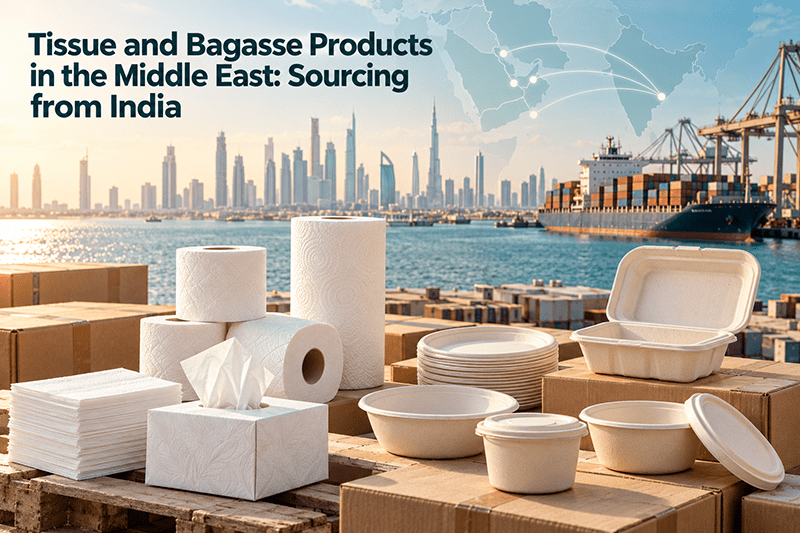
Why demand for tissue and bagasse products in the Middle East is rising
The market for tissue and bagasse products in the Middle East is driven by hospitality, tourism, large events and a busy food delivery culture. Hotels, malls, airports, restaurants and catering companies across the Gulf use napkins, facial tissue, towels and disposable tableware in high volumes every day. Governments are also restricting single-use plastics, which moves food service operators towards fibre-based plates, bowls and clamshells made from sugarcane bagasse.
Population patterns add to this demand. Large expatriate communities, many from South Asia, keep supermarkets, hypermarkets and neighbourhood groceries busy with household tissue. Religious tourism in Saudi Arabia creates seasonal surges in catering and hygiene consumption. Mega projects, exhibitions and sporting events across the region require temporary catering on a large scale, and organisers increasingly specify compostable or plastic-free tableware in their sustainability plans.
Country by country view of the GCC
Each Gulf country has its own character, even though they share a customs union. The UAE acts as a trading and re-export hub, Saudi Arabia is the largest consumer market with a strong localisation push, and Qatar, Oman, Kuwait and Bahrain are smaller but steady markets with active hospitality and catering sectors. Many importers start in one country, then supply neighbours through distributors or re-export from a free zone.
Beyond the Gulf, the UAE also serves as a gateway to neighbouring markets in East Africa, Central Asia and the wider region, where traders buy mixed loads of tissue and tableware for onward distribution. This re-export role means UAE importers often need a broader product range, flexible pack sizes and documents that suit several destinations. Discuss your end markets with your supplier so packing and labelling match where the goods will finally be sold.
| Country | Key demand drivers | Common entry route |
|---|---|---|
| UAE | Hotels, malls, food delivery, re-export trade | Importer or free zone trader |
| Saudi Arabia | Large population, religious tourism, giga projects | Local distributor, SABER compliance |
| Qatar | Hospitality, events, catering contracts | Catering and hotel suppliers |
| Oman, Kuwait, Bahrain | Retail groceries, restaurants, institutions | Wholesalers and regional distributors |
Buyer segments and sales channels
Hotels and resorts buy premium dinner napkins, box tissue and toilet rolls, often through hospitality suppliers. Airline and industrial caterers need bulk tableware, containers and napkins with consistent specifications. Hypermarkets and supermarkets stock household tissue packs, including private label. Cleaning and facility management companies buy M-fold towels and jumbo rolls for offices, malls and hospitals. Each segment has a preferred distributor network, so pick the channel before the product mix.
Relationships matter a great deal in Gulf trade. Buyers expect regular visits, quick replies on WhatsApp and a local partner who can handle credit, delivery and after-sales issues. Many successful importers combine a warehouse in the UAE or Saudi Arabia with a small sales team that covers hotels and caterers directly, while wholesalers handle smaller groceries and restaurants in secondary cities.
Regulations for tissue and bagasse products in the Middle East
The UAE has introduced a phased federal ban on many single-use plastic products, and other Gulf states are tightening rules on plastic bags and disposables. In Saudi Arabia, many consumer products must be registered and certified through the SABER conformity platform before clearance, so confirm requirements for your specific items with a local agent. Arabic labelling is commonly required for retail packs, and food contact documents help with catering tenders.
Compostability claims deserve care. If you market bagasse plates or bowls as compostable, ask your supplier for test reports against recognised standards such as EN 13432 or ASTM D6400, and keep them ready for tender files. Municipal composting is still developing in parts of the Gulf, so many buyers value bagasse mainly as a plant-based, plastic-free option rather than for end-of-life composting.
HS codes, GCC tariff and trade agreements
Tissue products are usually classified under HS heading 4818, and bagasse tableware under 4823, often 4823.70. Confirm the exact code with your clearing agent, then check duty in the GCC common customs tariff as applied by each member state. The India and UAE CEPA may offer preferential treatment on eligible goods with a valid certificate of origin, so ask your broker whether it applies to your products.
Documentation should be prepared before the goods leave India. A typical file includes the commercial invoice, packing list, bill of lading, certificate of origin and any product certificates your importer needs. Errors in product descriptions or quantities can hold containers at the port, so agree document formats with your clearing agent in advance and check draft documents carefully before the vessel sails.
In the Gulf, a supplier is judged on speed as much as price. Short transit from western India lets importers carry leaner stock and still serve demanding hotels and caterers.
Why source tissue and bagasse tableware from India
Proximity is a major advantage. Sailings from Mundra, Pipavav and Nhava Sheva to Jebel Ali, Dammam, Hamad Port, Sohar and Shuwaikh are short, typically days rather than weeks, although times vary by carrier, route and season. White Orchid makes virgin pulp tissue, bagasse clamshells, plates, bowls and containers at Santej, Gujarat, and holds ISO 9001, ISO 14001, ISO 22000, GMP and FSC certification.
Mixed containers suit Gulf distributors well. You can combine tissue napkins, facial tissue, toilet rolls and bagasse tableware in a single load, then refill quickly as fast movers sell through. Private label on poly bags, boxes and master cartons, and logo printing on napkins with an MOQ, help hotel groups and caterers present branded tableware without building their own factory relationships.
Seasonality needs planning too. Demand for catering tableware and napkins rises sharply around Ramadan, Eid, the peak tourist months and major exhibitions, while summer heat changes consumption patterns in some cities. Place orders well ahead of these peaks, allowing for production and shipping time, and agree a replenishment rhythm with your supplier so you are not forced into expensive air freight when stock runs low.
- Check SABER requirements early for every product planned for Saudi Arabia.
- Ask your broker whether India and UAE CEPA benefits apply to your goods.
- Prepare Arabic labels and food contact documents for retail and catering tenders.
- Keep compostability test reports on file for bagasse products in sustainability tenders.
- Use short transit times to hold leaner stock and reorder more often.
Become a White Orchid partner in the Gulf
White Orchid is appointing importers and distributors in the UAE, Saudi Arabia, Qatar, Oman, Kuwait and Bahrain. We ship by sea and air under EXW, FOB, CFR, CIF or door delivery terms. Review our certificates, then contact White Orchid on +91 9825109781 (phone or WhatsApp) or info@whiteorchidtissue.com to discuss samples, private label and your first mixed container.
Frequently Asked Questions
Do tissue products need SABER registration for Saudi Arabia?
Many consumer products require SABER conformity before customs clearance in Saudi Arabia. Requirements depend on the exact product and code, so confirm with a local agent or your Saudi importer before shipping.
Is the UAE a good base for distributing tissue across the GCC?
Many traders use the UAE as a hub because of its ports, free zones and re-export networks. Check duty and documentation rules for moving goods onward to other GCC states with your clearing agent.
Is bagasse tableware allowed under the UAE single-use plastic ban?
Bagasse tableware is plant-based moulded fibre, not plastic, which is why many UAE caterers use it as an alternative. Always check current local rules and keep supplier documentation available for inspection.
How fast can tissue and bagasse products reach the Gulf from India?
Sea transit from western Indian ports to major Gulf ports usually takes days rather than weeks. Actual times vary by carrier, route, schedule and season, plus time for production and customs clearance.