
What FCL and LCL mean for importers
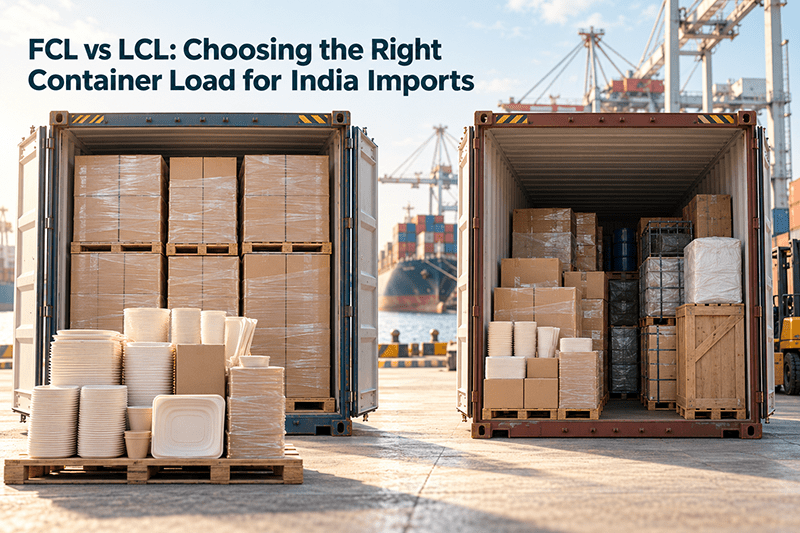
Choosing between FCL vs LCL is one of the first decisions an importer makes when buying from India. FCL (full container load) means you book an entire 20 ft or 40 ft container for your goods alone. LCL (less than container load) means your cartons share a container with cargo from other shippers, consolidated at a container freight station. The choice affects cost per carton, transit time, handling risk and how much stock you commit to at once.
For paper and fibre products such as tissue, napkins and bagasse tableware, the decision matters more than usual. These goods are light and bulky, so freight is charged mainly on volume, not weight. A small change in carton count or container choice can shift your landed cost noticeably, which is why experienced buyers plan the load before they finalise the order.
How LCL freight is charged
LCL freight is usually quoted per cubic metre (CBM) or per revenue tonne, whichever is greater. For light tissue cartons, volume nearly always decides the bill. On top of ocean freight, LCL shipments attract consolidation charges at origin, deconsolidation charges at the destination warehouse, and handling fees at each end. These fixed costs per shipment mean LCL is cheapest per unit only when the volume is genuinely small.
When FCL vs LCL tips in favour of a full container
There is a crossover point where a full container costs about the same as a large LCL shipment. On many routes, a common rule of thumb is that once cargo passes roughly 13 to 15 CBM, a 20 ft FCL starts to make sense, because you pay one container rate rather than a stack of per CBM and handling charges. Beyond that, a 40 ft or 40 ft high cube container usually gives the lowest cost per carton for bulky paper goods.
Treat this as a guide rather than a fixed number. Freight rates move with season, trade lane and carrier capacity, and a quote for a small FCL may occasionally beat LCL at even lower volumes. Ask your forwarder for both quotes on the same shipment, including all origin and destination charges, and compare the landed cost per carton rather than the headline freight figure.
| Factor | FCL | LCL |
|---|---|---|
| Best for | Regular orders, roughly 13 CBM and above | Trial orders and small top ups |
| Pricing basis | Flat rate per container | Per CBM plus handling charges |
| Handling | Sealed at loading, opened at your door | Loaded and unloaded at shared warehouses |
| Transit time | Moves directly after port cut off | Extra days for consolidation |
| Damage risk | Lower, fewer touch points | Higher, cartons handled more often |
Transit time and handling risk
FCL containers are stuffed at the factory, sealed, and not opened again until customs inspection or your warehouse. LCL cargo is moved to a consolidation warehouse, loaded with other goods, and later unpacked at a destination freight station. Each extra step adds days and handling. Indicative sea transit times from Gujarat ports range from roughly two to six weeks depending on destination, and they vary by carrier, route and season.
Handling risk is important for paper goods. Tissue cartons can be crushed by heavier cargo stacked above them in a shared container, and they can absorb odours or moisture from other goods. With FCL you control what goes into the container and how it is stacked, which helps protect toilet tissue rolls and kitchen paper towels that must arrive retail ready.
Mixed product FCL: combining categories in one container
Many importers solve the volume problem by combining products. Instead of shipping 8 CBM of napkins by LCL, they fill a 20 ft container with tissue napkins, facial tissue boxes and thermal rolls together. White Orchid can plan mixed loads across its range, so a distributor can test several lines in one full container and still enjoy FCL handling and a lower cost per carton.
Mixed loads work best when dense items such as thermal POS rolls and copy paper sit at the bottom, with lighter tissue cartons above. Share your product list early so the loading plan, packing list and invoice match exactly, which keeps customs clearance smooth at your end.
Incoterms and who books the freight
Your Incoterm decides who arranges the container. Under EXW or FOB, you or your forwarder book the freight, which suits buyers with strong carrier contracts. Under C&F (CFR) or CIF, White Orchid arranges ocean freight to your named port, and under door delivery the cargo is brought to your premises. For LCL, confirm who pays destination deconsolidation charges, because these are often the surprise item on a first invoice.
Compare landed cost per carton, not freight per container. The cheapest looking LCL quote often hides handling charges that disappear once you move to a full container.
A practical FCL vs LCL checklist for your first order
Before confirming, run through a short checklist with your supplier and forwarder. It takes an hour and can prevent weeks of delay or a cost overrun on arrival, especially on a first shipment where nobody yet knows your cargo profile.
- Calculate total CBM from actual carton dimensions, not a rough guess of pallets.
- Request both FCL and LCL quotes including all origin and destination charges.
- Check whether your warehouse can unload a full container within free time.
- Confirm the Incoterm and who pays deconsolidation, storage and delivery charges.
- Plan reorder frequency so your next shipment can move up to a full container.
Growing from LCL trial orders to regular FCL
A common path is to start with an LCL trial or a small mixed container, test sell-through, then move to regular FCL shipments on a fixed cycle. Once you know your monthly movement for each item, you can forecast a container every six or eight weeks, negotiate steadier freight, and keep a safety stock that covers the next transit window.
Bagasse tableware is a good example. Orders of biodegradable plates and clamshells often begin small while a buyer tests local demand with caterers and takeaway outlets, then grow once repeat customers are established. Planning the jump from LCL to FCL in advance keeps unit costs falling as volume rises.
Plan your container load with White Orchid
White Orchid manufactures tissue, thermal rolls, bagasse tableware and copy paper at Santej near Ahmedabad and ships from Mundra, Pipavav and Nhava Sheva. Share your product list, target volume and destination port, and our export team will suggest a container plan and quote on EXW, FOB, CFR, CIF or door delivery terms. Contact White Orchid on WhatsApp +91 9825109781 or at info@whiteorchidtissue.com.
Frequently Asked Questions
Is LCL cheaper than FCL for a first tissue order from India?
LCL is usually cheaper for very small volumes, such as a few cubic metres of samples or trial stock. Once cargo grows past roughly 13 to 15 CBM, a 20 ft FCL often costs similar or less per carton. Always compare full landed quotes.
Can I mix tissue, thermal rolls and bagasse items in one FCL container?
Yes. White Orchid can plan a mixed container across its range. Dense products such as thermal rolls and copy paper are loaded at the bottom, and lighter tissue cartons above, with one packing list and invoice for clearance.
Does LCL increase the risk of damage to paper products?
It can. LCL cartons are handled at consolidation and deconsolidation warehouses and may share space with heavy or damp cargo. FCL reduces touch points and lets the shipper control stacking, which helps protect light tissue cartons.
Which Incoterm is best when shipping LCL from India?
Many LCL buyers prefer CFR or CIF so the supplier arranges freight to the destination port, but they must still confirm who pays destination deconsolidation and handling charges. Door delivery removes most of that uncertainty for new importers.