
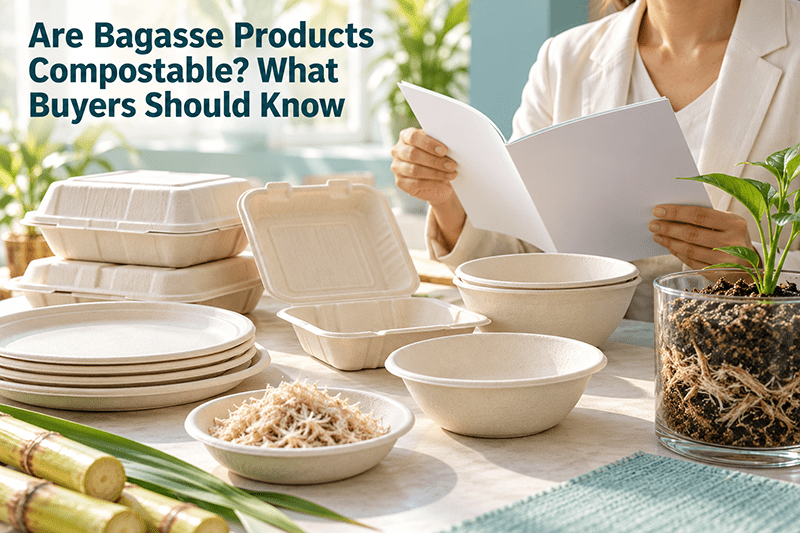
Are Bagasse Products Compostable? The Short Answer
Yes, bagasse products are compostable in principle, because they are moulded from sugarcane fibre, a plant material that microorganisms can break down. But the useful answer for a buyer is more detailed. How fast a plate breaks down depends on the composting conditions, the thickness of the item and any additives used for oil and water resistance. What you can legally claim on packaging depends on test reports, not just on the raw material.
Distributors who understand these details avoid two common problems: disappointed customers whose home compost bin did not behave as expected, and marketing claims that cannot be backed up when a regulator or large retail buyer asks for evidence.
Biodegradable vs Compostable: Not the Same Claim
Biodegradable simply means a material can eventually be broken down by microorganisms, with no fixed timeframe. Compostable is stricter. It means the material breaks down within a defined period under composting conditions, leaves no harmful residue and does not damage the quality of the finished compost. Plant fibre products like bagasse are generally both, but a compostable claim is the one buyers and authorities scrutinise, because it implies a tested, predictable result.
In practice, many buyers use the two words interchangeably, which causes confusion. A plastic bag that fragments into tiny pieces over years might be described loosely as degradable, yet it is nothing like a moulded fibre plate that turns into compost. Keeping the terms precise in your catalogue and sales conversations helps customers trust your range and makes it easier to answer detailed questions from procurement teams.
Industrial Composting of Bagasse Tableware
Industrial or commercial composting facilities manage large piles with controlled moisture, aeration and elevated temperatures. These conditions speed up decomposition considerably. Bagasse plates, bowls and clamshells are well suited to this route, particularly when collected together with food waste from events, canteens and quick service restaurants. Many municipal food waste schemes accept moulded fibre packaging, but acceptance varies by city, so check local rules before telling customers where to dispose of products.
One practical advantage of bagasse in industrial composting is that it can go into the same collection bin as leftover food. Events, stadiums and corporate canteens that switch fully to moulded fibre plates, bowls and clamshells avoid the need to separate food scraps from packaging, which saves labour and reduces contamination of the compost stream. This is a strong selling point when you pitch to caterers.
Home Composting of Bagasse: What to Expect
Home compost heaps run cooler and less consistently than industrial facilities. Bagasse can still break down at home, but it usually takes longer, and thick items such as compartment plates or containers may need tearing into pieces first. Moisture and mixing make a real difference. If you want to promote home compostability specifically, ask whether the product has been tested against a home composting standard, because industrial composting reports do not automatically cover home conditions.
Set realistic expectations with retail customers. A household that adds a single plate to an active, well turned heap will usually see it soften and disappear over time. A plate left on top of a dry, rarely turned bin may stay recognisable for much longer. Simple disposal advice on your packaging, such as tearing items and mixing them with garden waste, improves results.
| Factor | Industrial composting | Home composting |
|---|---|---|
| Temperature | Controlled and elevated | Lower and variable |
| Breakdown speed | Faster and predictable | Slower, depends on care |
| Common standards | EN 13432, ASTM D6400 | Separate home compost schemes |
| Best for | Events, canteens, municipal food waste | Households with active compost heaps |
Test Reports: EN 13432 and ASTM D6400 Explained
The two standards buyers ask about most are EN 13432, widely used in Europe, and ASTM D6400, widely used in North America. Both define requirements for industrial compostability, typically covering disintegration, biodegradation, effects on compost quality and limits on certain heavy metals. A test report from an accredited laboratory shows how a specific product performed. Certification marks from recognised schemes add another layer, based on those reports and ongoing checks.
When a supplier shares a report, check the product name and description, the laboratory, the date, the standard tested against and whether the tested thickness matches the item you are buying. A report on a thin plate may not cover a thick container.
Also look at the scope of any certification mark. Some marks apply to a named product family, while others apply only to specific item codes. If you add new sizes to your range, ask whether they are covered or need further testing. Large retail buyers often audit these details, so organising your documents by item code saves time when they send a supplier questionnaire.
Compostable is a claim, not a material. The plant fibre makes composting possible, but test reports make the claim credible to buyers and regulators.
Additives and Their Effect on Compostability
To handle hot curries and oily foods, moulded fibre products often include food grade additives for oil and water resistance. These additives can affect compostability results and regulatory status. Several US states restrict PFAS in food packaging, and European buyers increasingly ask for declarations on this point. Always request an additive declaration alongside compostability reports, so you know the tested product and the product you import are made the same way.
How Distributors Should Label Compostable Bagasse Products
Honest labelling protects your brand. Consumer protection authorities in several regions have taken a closer interest in green claims, and vague statements attract complaints. Keep claims specific and supported. If you use private label packaging for bagasse plates or bagasse bowls, agree the wording carefully before printing. These simple rules help.
- Say industrially compostable if your evidence covers industrial composting conditions only.
- Mention the standard, such as EN 13432, only when a valid report supports it.
- Avoid vague phrases like earth friendly without explaining what they actually mean.
- Tell customers how to dispose of products in their local waste system.
- Keep copies of test reports ready for retail buyers and authorities to review.
Source Compostable Bagasse Tableware From White Orchid
White Orchid moulds plates, bowls, clamshells and containers with lids from sugarcane bagasse pulp, which is biodegradable and compostable. Our factory at Santej, near Ahmedabad, holds ISO 9001, ISO 14001, ISO 22000, GMP and FSC certifications. Tell us which documents your market requires and we will guide you on what is available. Visit our certificates page and contact us or WhatsApp +91 9825109781.
Frequently Asked Questions
How long does bagasse take to compost?
In an industrial composting facility, bagasse usually breaks down within weeks to a few months. At home it takes longer and depends on temperature, moisture and item thickness. Tearing plates into smaller pieces helps.
Can I put bagasse plates in my home compost bin?
Usually yes, especially if torn into pieces and mixed with green waste. Breakdown is slower than in industrial composting. For home compostable claims on packaging, look for a specific home composting test or certification.
What is the difference between EN 13432 and ASTM D6400?
Both are industrial compostability standards. EN 13432 is widely used in Europe and ASTM D6400 in North America. They cover similar areas such as disintegration, biodegradation and compost quality, with some differences in detail.
What documents should I request from a bagasse supplier?
Ask for compostability test reports or certificates for the specific items, food contact migration reports, additive and PFAS declarations, and product specifications including weight, so you can match documents to the goods you import.